Your Skin Deserves More Than Just a Filter — Here’s What Actually Works
Raise your hand if you’ve ever edited your skin tone in a photo and wished real life came with that same one-tap fix.
You’re not alone.
Millions of people struggle daily with dull skin, dark spots, uneven skin tone, and stubborn pigmentation. And while serums and moisturizers help to a point, sometimes your skin needs something more clinical — more targeted.
That’s where chemical peels come in.
If you’ve been exploring a reliable skin whitening treatment in Indore that delivers visible, science-backed results without excessive downtime, a chemical peel might be exactly what your skin has been waiting for.
In this complete guide, we’ll walk you through everything — how the skin peeling procedure works, the types available, what happens before the treatment, what your skin looks like after, and how to care for it. No fluff, no scare tactics — just honest, expert-backed information.
What Is a Chemical Peel, Really?
A chemical peel is a controlled chemical exfoliation procedure in which a trained skin specialist applies a medical-grade solution to the skin. This process — also called chemical exfoliation — gently dissolves and sheds the damaged outer skin layers, allowing a fresher, brighter, younger layer to surface from underneath.
Think of it like this: your skin accumulates dead cells, melanin build-up, clogged pores, and environmental damage over time. A chemical peel hits the reset button.
What makes skin brightening treatment with chemical peels so compelling is versatility. Peels can be tailored to your skin tone, concern, depth requirement, and lifestyle — making them suitable for a wide range of people.
Why Do People in Indore Choose Chemical Peels?
Living in a city like Indore means constant exposure to heat, humidity, dust, and UV rays. The cumulative damage shows up on your skin faster than you’d think. Over time, this leads to:
- Dull, tired-looking skin that no amount of regular face wash can fix
- Hyperpigmentation — dark patches that appear after sun exposure or hormonal changes
- Uneven skin tone that makes your complexion look patchy or blotchy
- Post-acne marks and scars that linger long after the breakout has cleared
- Melasma — hormonal pigmentation common in women, especially after pregnancy
- Fine lines and rough skin texture that make you look older than you feel
A targeted chemical peel for pigmentation addresses all of these concerns effectively — and that’s why it remains one of the most in-demand skin glow treatments at leading clinics like Alpha Skin Clinic in Indore.
Types of Chemical Peels: Which One Is Right for You?
Not all peels are created equal. The skin peeling procedure varies depending on the depth, concentration of acid, and the skin concern being treated. Here’s a clear breakdown:
1. Superficial / Light Peels — The Gentle Brightener
These use mild alpha hydroxy acid peels (AHAs) such as glycolic and lactic acid, or salicylic acid peels at low concentrations.
- Common acids: Glycolic acid, lactic acid, salicylic acid, mandelic acid
- Depth: Works on the epidermis (outermost skin layer)
- Best for: Mild dullness, uneven skin tone, oily/acne-prone skin, early pigmentation, skin texture
- Downtime: None to very minimal — you can return to routine the same day
- Sessions needed: 4–6 sessions (spaced 2–4 weeks apart)
A glycolic acid peel, for example, is excellent for general brightness and smoothness. A salicylic acid peel works wonders for acne-prone skin by unclogging pores and reducing inflammation.
2. Medium-Depth Peels — The Targeted Corrector
These penetrate deeper, reaching the upper dermis for more significant correction.
- Common acids: Trichloroacetic acid (TCA peel), Jessner’s solution, combination peels
- Depth: Upper to mid-dermis
- Best for: Moderate pigmentation, sun damage, acne scars, early melasma, moderate wrinkles
- Downtime: 5–7 days (visible peeling, mild redness)
- Sessions needed: 2–4 sessions
The TCA peel is one of the most popular choices for hyperpigmentation treatment and melasma because of its ability to penetrate beyond the surface without requiring deep-peel recovery time.
3. Deep Peels — The Intensive Renewer
These are the most powerful peels available in clinical settings.
- Common acids: High-concentration TCA, phenol
- Depth: Mid-dermis
- Best for: Severe sun damage, deep wrinkles, stubborn pigmentation, extensive scarring
- Downtime: 1–3 weeks
- Sessions needed: Typically one session with long-lasting results
Deep peels require the most careful medical supervision and are recommended only when milder peels haven’t delivered adequate results.
The Science Behind Chemical Exfoliation
Here’s what actually happens during chemical exfoliation at a cellular level:
When the acidic solution is applied to your skin, it breaks down the bonds holding dead, damaged skin cells together. This triggers controlled cell turnover — your skin’s natural healing response kicks in, pushing newer, healthier cells to the surface.
Depending on the peel depth, this process also:
- Stimulates collagen production — improving firmness and elasticity
- Disrupts melanin clusters — fading dark spots and uneven pigmentation
- Unclogs pores — reducing breakouts and blackheads
- Refines skin texture — smoothing roughness and minimising pore appearance
The result? Skin that’s visibly brighter, clearer, and more even-toned. That’s exactly why chemical peels remain a cornerstone of skin rejuvenation in Indore.
Before the Peel: How to Prepare Your Skin
Preparation is half the battle. A well-prepped skin absorbs the peel more evenly, reacts more predictably, and heals significantly faster.
Here’s what to do 2–4 weeks before your session:
- Start a pre-peel priming routine — your doctor may prescribe retinoids, vitamin C serums, or mild alpha hydroxy acid peel products to condition the skin
- Apply SPF 50+ sunscreen every single day — this is non-negotiable, especially when preparing for a hyperpigmentation treatment
- Avoid waxing, threading, or laser hair removal for at least 1 week before the procedure
- Disclose all medications — isotretinoin, blood thinners, or hormonal treatments can affect peel outcomes
- Stay hydrated — inside and out. Hydrated skin heals faster and shows better results
- Stop any prescribed actives like retinol or high-strength AHAs 5–7 days before, unless advised otherwise
At Alpha Skin Clinic, Dr. Jaismeen Kaur Arora begins every peel journey with a thorough skin analysis to assess your skin tone, texture, pigmentation depth, and sensitivity. Based on this, a customised pre-peel regimen is designed specifically for your skin — because what works for one person may not work for another.
During the Procedure: Step by Step
Curious about what actually happens once you’re in the clinic? Here’s the full breakdown of the skin peeling procedure:
Step 1 — Consultation & Skin Assessment Skin type, concerns, and sensitivity levels are evaluated. Peel type and acid concentration are finalised.
Step 2 — Deep Cleansing The skin is thoroughly cleansed to remove oil, makeup, SPF, and surface impurities.
Step 3 — Pre-peel Degreasing An acetone or alcohol-based solution is applied to ensure uniform peel absorption across all skin areas.
Step 4 — Peel Application The chemical solution is carefully applied using a brush or gauze — section by section, with precision.
Step 5 — What You’ll Feel Mild tingling, warmth, or slight stinging is normal. For medium-depth peels, cool air or compresses may be used for comfort. This is a sign the chemical exfoliation is working.
Step 6 — Neutralization or Removal The peel is either neutralized with a base solution or washed off after the appropriate dwell time.
Step 7 — Calming & Post-Procedure Care A soothing mask or serum is applied. Sunscreen is applied before you leave the clinic.
Total session time: 20–45 minutes, depending on the peel type and skin area treated.
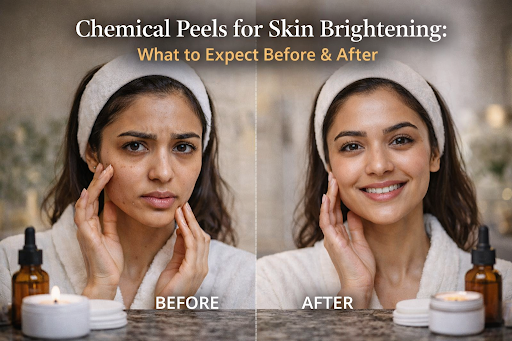
After the Peel: What to Expect — Day by Day
This is the part most people are most anxious about. Here’s a realistic, honest day-by-day breakdown:
| Day | What Happens to Your Skin |
| Day 1–2 | Skin appears slightly flushed or pink. Feels tight and sensitive. No peeling yet. |
| Day 3–4 | Dryness increases. You may notice fine flaking at the edges of the face. |
| Day 5–7 | Visible peeling begins — often around the mouth, forehead, and chin. |
| Day 7–10 | New, brighter skin starts to emerge. Texture noticeably smoother. |
| Day 14+ | Full results visible. Uneven skin tone improved. Radiance restored. |
⚠️ Critical Rule: Do NOT pick, peel, or pull the shedding skin. Let it shed naturally. Forced removal can cause scarring or worsen pigmentation — undoing all the progress of your melasma treatment or hyperpigmentation treatment.
Post-Peel Care: The Golden Rules That Protect Your Results
Post-peel care is not optional — it’s what determines whether your results last 3 months or 12.
Your skin is fresh, new, and vulnerable after the procedure. Here’s how to protect it:
✅ DO:
- Apply a gentle, fragrance-free moisturizer 2–3 times daily
- Use SPF 50+ broad-spectrum sunscreen religiously — indoors and outdoors, cloudy or sunny
- Cleanse with a mild, soap-free, pH-balanced face wash
- Drink at least 2–3 litres of water daily to support skin healing
- Follow your doctor’s prescribed post-peel care products without substitution
- Attend your follow-up appointments to monitor skin recovery
❌ DON’T:
- Step into direct sunlight without sunscreen for a minimum of 2 weeks
- Use scrubs, loofahs, or physical exfoliants while skin is peeling
- Apply makeup for at least 48–72 hours post-procedure
- Use retinoids, AHAs, BHAs, or any active ingredients until skin has fully healed
- Touch, pick, or scratch peeling skin under any circumstances
Skipping post-peel care steps — especially sunscreen — can not only reduce results but can also cause rebound pigmentation, completely defeating the purpose of the skin brightening treatment.
Who Is a Good Candidate for Chemical Peels?
A chemical peel for pigmentation or skin brightening is suitable for most adults — but the right peel must match your skin’s unique condition.
You’re likely an excellent candidate if you have:
- Hyperpigmentation, dark spots, or sun damage
- Uneven skin tone or blotchy complexion
- Melasma or hormonal pigmentation
- Post-acne marks or mild to moderate acne scarring
- Rough texture, enlarged pores, or dull skin
- Fine lines and early signs of skin ageing
Approach with caution or delay if you:
- Are currently pregnant or breastfeeding
- Have active skin infections, cold sores, or open wounds
- Have used isotretinoin within the last 6 months
- Have a personal history of keloid or hypertrophic scarring
Consulting an expert dermatologist in Indore before starting any skin brightening treatment ensures the correct peel is chosen for your skin type — protecting you from adverse reactions and maximising your results.
Chemical Peels vs. Other Skin Brightening Treatments
Wondering how chemical peels stack up against other popular treatments? Here’s an honest comparison:
| Treatment | Best For | Downtime | No. of Sessions | Approx. Cost/Session |
| Chemical Peel | Pigmentation, acne marks, uneven tone | Minimal – 1 week | 3–6 | ₹2,000–₹8,000 |
| Laser Toning | Deep pigmentation, sun damage | Minimal | 4–8 | ₹3,000–₹10,000 |
| Microdermabrasion | Surface texture, superficial marks | None | 6–8 | ₹1,500–₹4,000 |
| Glutathione Therapy | Overall skin brightening | None | Ongoing | ₹2,000–₹6,000 |
| Hydrafacial | Hydration, mild glow | None | Monthly | ₹3,000–₹7,000 |
For targeted melasma treatment, hyperpigmentation treatment, and overall skin glow treatment, chemical peels — especially a TCA peel or glycolic acid peel — consistently deliver faster and more visible results than milder surface-level alternatives.
How Many Sessions Do You Actually Need?
This depends on the peel depth and your skin’s specific concern:
- Superficial peels (glycolic acid / salicylic acid peel): 4–6 sessions, every 2–4 weeks
- Medium-depth peels (TCA peel / Jessner’s): 2–4 sessions, every 4–6 weeks
- Deep peels (phenol / high TCA): 1 session, with long-term maintenance as needed
Most patients notice a visible difference after 2–3 sessions. Completing the full recommended course is what delivers lasting, transformative results.
Why Alpha Skin Clinic for Your Chemical Peel in Indore?
When it comes to a medical-grade skin peeling procedure, the clinic and the doctor matter enormously.
At Alpha Skin Clinic, Indore, every treatment begins with a proper skin analysis and ends with structured post-peel care support — not just a one-time procedure. Here’s what sets the clinic apart:
- Personalised peel selection — your acid type, concentration, and number of coats are customised
- Safe calibration for Indian skin tones — melanin-rich skin is more prone to post-inflammatory hyperpigmentation, and every peel is adjusted accordingly
- Evidence-based approach to melasma treatment and pigmentation — no guesswork, no generic protocols
- Comprehensive aftercare guidance — you leave knowing exactly what to do and what to avoid
- Transparent consultations — no hidden upselling, no pressure
Dr. Jaismeen Kaur Arora, with her clinical expertise in skin rejuvenation in Indore, brings a patient-first philosophy to every treatment at Alpha Skin Clinic. Whether your goal is fading a stubborn dark spot or achieving a full-face skin glow treatment, the approach is always thoughtful, precise, and tailored.
Real Results: What Can You Honestly Expect?
Let’s set realistic expectations — because overpromising helps no one.
✅ You CAN realistically expect:
- Visibly brighter, more luminous skin
- A notable reduction in dark spots and pigmentation
- Smoother, more refined skin texture
- Reduced appearance of fine lines and pores
- Improved results from your chemical exfoliation sessions over time
- A refreshed, healthier-looking complexion — the true skin glow treatment effect
❌ Don’t expect:
- Instant, dramatic whitening after a single session
- Permanent removal of deep scars in one go
- Zero recovery time with medium or deep peels
The best results come from consistency, realistic expectations, and disciplined post-peel care. A proper skin brightening treatment is a journey — not a one-day fix.
Frequently Asked Questions
Q1. Is a chemical peel for pigmentation safe for Indian skin tones?
Yes — when performed by a qualified professional. Indian skin is more melanin-rich and, as a result, more susceptible to post-inflammatory hyperpigmentation (PIH). This is why choosing the right peel acid, concentration, and timing is critical. Superficial alpha hydroxy acid peels (glycolic, lactic) and low-strength salicylic acid peels are generally well-tolerated. A proper patch test and professional consultation are essential before any hyperpigmentation treatment.
Q2. How long do results from a chemical peel last?
Results from superficial peels (like a glycolic acid peel) can last 3–6 months with proper sun protection. Medium-depth peel results (TCA peel) may last 6–12 months or longer when paired with a good home routine. Consistent post-peel care — especially SPF application — is what sustains the improvement.
Q3. Is the skin peeling procedure painful?
Most patients describe the sensation as a mild tingling or warm stinging — particularly with medium-depth peels. This sensation typically lasts only 1–5 minutes and subsides on its own. Deep peels may involve more discomfort and require topical numbing, but these are always conducted under proper medical supervision.
Q4. Can I combine a chemical peel with other skin brightening treatments?
Yes — in many cases, combining treatments gives better results. For example, melasma treatment often combines a TCA peel with topical agents like kojic acid or tranexamic acid for enhanced results. Skin rejuvenation in Indore at a clinical level frequently involves a combination approach. However, always follow your dermatologist’s guidance on timing and sequencing to avoid skin stress.
Q5. How much does a chemical peel cost in Indore?
Chemical peel costs in Indore typically range from ₹2,000 to ₹8,000 per session, depending on the peel type (glycolic acid peel, salicylic acid peel, TCA peel, etc.), the depth of treatment, and your clinic’s expertise. A personalised consultation at Alpha Skin Clinic will help you understand the right treatment plan and associated investment based on your specific skin goals.
The Bottom Line
Chemical peels — whether a light alpha hydroxy acid peel for everyday brightness or a deeper TCA peel for stubborn melasma — remain one of dermatology’s most trusted and versatile tools for skin brightening treatment.
But the results you get aren’t just about the peel. They’re about:
- Who performs it (expertise matters enormously)
- How well your skin is prepared (pre-peel priming sets the foundation)
- How carefully you follow post-peel care (aftercare determines longevity)
If you’re ready to move beyond filters and see a real, lasting transformation in your skin’s tone and texture, the first step is a proper consultation.
Book your skin assessment at Alpha Skin Clinic with Dr. Jaismeen Kaur Arora today — because your skin’s best chapter starts with the right guidance.
📍 Alpha Skin Clinic, Indore 👩⚕️ Dr. Jaismeen Kaur Arora — Skin & Aesthetic Specialist 📞 Book your consultation and take the first step toward brighter, healthier skin.
Disclaimer: Results may vary from person to person. This blog is intended for informational purposes only and does not constitute medical advice. Please consult a qualified dermatologist before undergoing any skin treatment.