You’re Eating Right — So Why Is Your Hair Still Falling Out?
You wake up, run your fingers through your hair, and a clump comes loose. Again.
You’ve been eating salads. Taking care of yourself. Yet the hair on your pillow, your bathroom drain, and your comb tells a different story.
Here’s the truth most people miss: what you’re eating — or more precisely, what your body is missing — could be the single biggest reason your hair is falling out. And if you’re actively searching for the best hair fall treatment in Indore, the first place to look isn’t your scalp. It’s your bloodwork.
This blog breaks down the exact nutritional deficiencies linked to hair loss, what symptoms to watch for, and how to fix them — so you can stop treating the symptom and start addressing the root cause.
Why Nutrition Matters More Than You Think for Hair Health
Hair is not just dead protein sitting on your head. Each strand goes through an active growth cycle — anagen (growth), catagen (transition), and telogen (rest/shedding). This cycle is extremely sensitive to what’s happening inside your body.
When your body faces a nutritional deficit, it prioritises vital organs — your heart, brain, and liver — over non-essential structures like hair follicles. The result? Hair follicles get deprived of nutrients and slip prematurely into the resting and shedding phase.
This is why hair loss from nutritional deficiencies often appears diffuse — thin all over, not just in patches.
The good news: once the deficiency is corrected, hair growth can resume. But you need to identify which nutrient you’re lacking first.
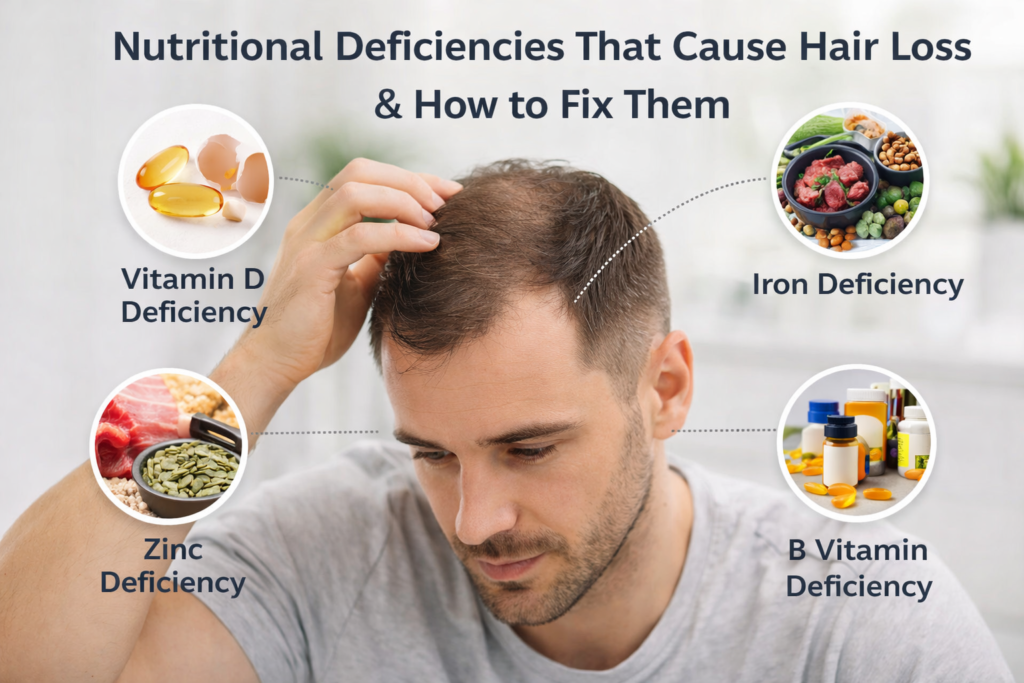
The 8 Most Common Nutritional Deficiencies That Cause Hair Loss
1. 🩸 Iron Deficiency — The #1 Hidden Culprit
Iron is essential for producing haemoglobin, which carries oxygen to your cells — including your hair follicles. Without adequate oxygen, follicles weaken and shed hair faster than they can grow it back.
Who’s at risk:
- Women with heavy periods
- Vegetarians and vegans
- Pregnant or postpartum women
Symptoms beyond hair loss: Fatigue, pale skin, cold hands and feet, brittle nails
How to fix it:
- Eat iron-rich foods: spinach, lentils, tofu, chicken, red meat, pumpkin seeds
- Pair iron foods with Vitamin C (lemon, amla) to boost absorption
- Avoid tea/coffee with meals — they block iron uptake
- Get a serum ferritin test (not just haemoglobin — ferritin is more accurate)
2. 🌞 Vitamin D Deficiency — The Sunshine Vitamin Your Follicles Need
Vitamin D receptors are found directly in hair follicles. Low Vitamin D is strongly associated with alopecia areata and telogen effluvium (sudden diffuse shedding).
Despite living in sun-rich India, Vitamin D deficiency is alarmingly common — especially in people who spend most of their time indoors.
Symptoms: Bone aches, fatigue, low mood, frequent infections
How to fix it:
- Get 15–20 minutes of direct sunlight (arms/legs) daily, ideally before 10 AM
- Eat fatty fish (salmon, mackerel), egg yolks, fortified dairy
- Supplement with Vitamin D3 (not D2) as prescribed by your doctor
3. 🥩 Protein Deficiency — Hair Is Literally Made of It
About 95% of each hair strand is made of a protein called keratin. If your diet is low in protein, your body will sacrifice hair growth to meet more critical protein demands.
Protein deficiency causes a specific type of hair loss where hair becomes brittle, loses colour, and sheds in large volumes.
Who’s at risk: Those on crash diets, extreme calorie restriction, or very low-protein vegetarian diets
How to fix it:
- Consume 0.8–1 gram of protein per kilogram of body weight daily
- Best sources: eggs, Greek yoghurt, lentils (dal), paneer, chickpeas, fish, chicken
- Spread protein intake across meals rather than eating it all at once
4. 🔬 Zinc Deficiency — The Repair Mineral
Zinc plays a key role in hair tissue growth and repair. It also regulates the oil-secreting glands around the follicles, keeping the scalp healthy. Even a mild zinc deficiency can lead to noticeable thinning and shedding.
Caution: Too much zinc can actually cause hair loss. Supplementation should only be done after a confirmed test.
How to fix it:
- Eat zinc-rich foods: pumpkin seeds, chickpeas, cashews, eggs, dark chocolate, oysters
- Avoid over-supplementing without medical guidance
5. 🧬 B Vitamins (Especially Biotin & B12) — The Growth Boosters
The entire B-vitamin complex is critical for healthy hair — but two deserve special attention:
Biotin (B7): Biotin deficiency causes brittle hair and hair loss. While severe deficiency is rare, borderline low biotin (from high raw egg white consumption, gut issues, or genetic variation) can affect hair noticeably.
Vitamin B12: B12 is necessary for red blood cell production and oxygen delivery to hair follicles. Deficiency is common in vegetarians and vegans since B12 is primarily found in animal products.
How to fix it:
- Biotin: eggs, almonds, sweet potato, avocado
- B12: dairy, eggs, fish, poultry, or a good B12 supplement for vegetarians/vegans
6. ☀️ Vitamin C — The Collagen Builder
Vitamin C helps synthesise collagen, which forms the structural support around hair follicles. It also helps your body absorb non-haem (plant-based) iron more effectively — making it doubly important.
How to fix it:
- Eat guava, amla (Indian gooseberry), citrus fruits, strawberries, bell peppers, tomatoes
- Amla is one of the richest natural sources of Vitamin C and has long been used in Ayurveda for hair health
7. 🥑 Vitamin E — The Scalp Protector
Vitamin E is a powerful antioxidant that protects scalp cells from oxidative stress. A deficiency can leave hair brittle and prone to breakage.
How to fix it:
- Eat sunflower seeds, almonds, avocado, spinach, olive oil
- Vitamin E oil can also be applied topically, though dietary intake is more sustainable
8. 🐟 Omega-3 Fatty Acids — The Anti-Inflammatory Allies
Omega-3s nourish hair follicles, reduce scalp inflammation, and support the hair growth phase. Deficiency leads to dry, dull, brittle hair and increased shedding.
How to fix it:
- Eat fatty fish (salmon, mackerel, sardines) twice a week
- For vegetarians: flaxseeds, chia seeds, walnuts, and hemp seeds are excellent plant-based sources
- Fish oil or algae-based omega-3 supplements are another option
Quick Reference: Nutrient Deficiencies & Hair Loss at a Glance
| Nutrient | Effect on Hair | Best Food Sources | Test to Ask For |
| Iron | Diffuse shedding, thinning | Spinach, lentils, red meat | Serum Ferritin |
| Vitamin D | Alopecia areata, TE | Sunlight, fatty fish, eggs | 25-OH Vitamin D |
| Protein | Brittle, discoloured hair | Eggs, paneer, dal, chicken | Serum Albumin |
| Zinc | Shedding, poor regrowth | Pumpkin seeds, chickpeas | Serum Zinc |
| Biotin (B7) | Brittle, thinning hair | Eggs, almonds, avocado | Serum Biotin |
| Vitamin B12 | Scalp oxygenation issues | Dairy, fish, eggs | Serum B12 |
| Vitamin C | Follicle weakness, slow growth | Amla, guava, citrus | Not usually tested |
| Omega-3 | Dry, brittle, inflamed scalp | Flaxseeds, fish, walnuts | Blood lipid panel |
Signs Your Hair Loss Is Nutritional — Not Genetic
Not sure if your hair loss is nutritional or inherited? Here are some clues:
- Diffuse shedding (thinning all over, not just temples or crown)
- Sudden onset, often 2–3 months after a stressful event, illness, or diet change
- Nails are brittle or have ridges — nutrients that affect hair often affect nails too
- You’ve recently been on a crash diet or have very restricted eating habits
- You’re vegetarian/vegan and haven’t been supplementing B12 or monitoring iron
- You’re a woman of menstruating age with heavy periods
If multiple boxes apply to you, nutritional testing is a logical first step before considering other treatments.
Why You Shouldn’t Self-Supplement Without Testing
This is important — and often overlooked.
Many people read about hair loss and immediately buy a bundle of supplements. But more isn’t always better:
- Excess Vitamin A can cause hair loss
- Excess Zinc interferes with copper absorption and worsens shedding
- Excess Iron is toxic and damages organs
- Excess selenium causes brittle hair and nails
A simple blood panel — serum ferritin, Vitamin D, B12, zinc, and a complete blood count — can tell you exactly where you stand. Targeted, tested supplementation is far more effective (and safer) than guessing.
This is where consulting a dermatologist in Indore becomes invaluable. A specialist can not only interpret your bloodwork in the context of your hair loss pattern, but also rule out other causes like thyroid dysfunction, hormonal imbalance, or scalp conditions that may be contributing to your problem.
Dr. Jaismeen Kaur Arora’s Approach at Alpha Skin Clinic
At Alpha Skin Clinic, Dr. Jaismeen Kaur Arora takes a root-cause approach to hair fall. Rather than offering one-size-fits-all treatments, she begins every consultation with a thorough assessment — including dietary history, lifestyle evaluation, and targeted investigations.
Her approach typically involves:
- Detailed scalp analysis to identify shedding patterns and follicle health
- Blood investigations to detect nutritional and hormonal deficiencies
- Personalised dietary and supplementation guidance based on your actual test results
- Medical and procedural treatments (such as PRP, mesotherapy, or GFC therapy) where clinically indicated
- Follow-up monitoring to track progress and adjust the plan
The goal is not just to slow hair loss — but to understand why it’s happening and correct it from within.
A Practical 4-Week Diet Plan to Support Hair Growth
You don’t need to overhaul your entire life. Small, consistent changes go a long way.
Week 1–2: Build the foundation
- Add one egg to your breakfast daily
- Replace refined snacks with a small handful of mixed seeds (pumpkin + flax + sunflower)
- Drink amla juice or eat raw amla every morning
Week 3–4: Layer in variety
- Add a serving of lentils or legumes to lunch
- Include at least one green leafy vegetable (spinach, methi, kale) at dinner
- Eat a small portion of walnuts or almonds as an afternoon snack
Throughout: Stay consistent with hydration. Dehydration affects scalp health. Aim for at least 2–2.5 litres of water daily.
Lifestyle Factors That Make Nutritional Deficiencies Worse
Even a nutrient-rich diet can fall short if your lifestyle is working against absorption and retention:
- Chronic stress depletes B vitamins and zinc at an accelerated rate
- Poor sleep disrupts growth hormone production, which hair follicles depend on
- Crash dieting triggers telogen effluvium (mass shedding) within 2–3 months
- Excessive alcohol impairs absorption of zinc, folate, and B vitamins
- Smoking reduces blood flow to the scalp and increases oxidative stress on follicles
- Gut health issues (IBS, low stomach acid, dysbiosis) impair nutrient absorption even when diet is good
Addressing these factors alongside nutritional correction will significantly accelerate your results.
Frequently Asked Questions (FAQs)
Q1. How long does it take to see hair regrowth after correcting a nutritional deficiency?
It depends on the deficiency and how long it has been present. Hair follicles have a slow cycle — most people notice a reduction in shedding within 6–8 weeks of correcting the deficiency, and visible regrowth typically begins around 3–6 months. Consistency is key; stopping supplementation too early can reverse progress.
Q2. Can I diagnose a nutritional deficiency on my own without blood tests?
Symptoms can give you clues, but they are not reliable for diagnosis. For example, fatigue and hair loss could indicate iron deficiency, thyroid issues, or B12 deficiency — all of which require different interventions. A blood test is the only accurate way to confirm what your body is actually lacking.
Q3. Which nutritional deficiency is most commonly linked to hair loss in Indian women?
Iron deficiency (specifically low serum ferritin) is the most commonly identified nutritional cause of hair fall in Indian women, particularly those of reproductive age. Vitamin D deficiency is a close second, given that indoor lifestyles are increasingly common despite India’s sunny climate.
Q4. Are hair supplements available over the counter actually effective?
Some can help if you genuinely have a deficiency — biotin, iron, B12, and Vitamin D supplements are widely available and effective when taken for the right reason. However, many commercial “hair growth” supplements are over-marketed and contain doses that far exceed what the body can use. Always get tested before supplementing, and prefer food sources where possible.
Q5. When should I see a doctor instead of trying dietary fixes on my own?
See a specialist if: your hair loss has been ongoing for more than 3 months, you’re losing more than 100 strands a day consistently, you notice patchy or patterned hair loss (not just diffuse thinning), or dietary changes and basic supplements haven’t improved things after 2–3 months. Hair loss can have multiple overlapping causes, and a professional evaluation ensures you’re not missing something important.
The Bottom Line
Hair loss is rarely about just one thing.
But nutritional deficiencies are among the most common, most correctable, and most overlooked causes of hair fall — especially in young women following restricted diets, or anyone whose gut health, stress levels, or lifestyle is quietly draining their nutrient reserves.
Start with a blood test. Eat a varied, protein-rich diet. Address the deficiencies that show up. Give it time.
And if the shedding doesn’t slow down — or you want expert guidance to find the real root cause — Dr. Jaismeen Kaur Arora at Alpha Skin Clinic, Indore is available for in-depth consultations that go far beyond surface-level solutions.
Because healthy hair starts from the inside out.
Disclaimer: This blog is for informational purposes only and does not constitute medical advice. Please consult a qualified dermatologist before starting any supplementation or treatment.