That Stubborn Pimple on Your Jawline Isn’t Random — Here’s What Your Skin Is Really Telling You
You’ve tried every face wash. You’ve cut out junk food. You’ve even tried not touching your face.
And yet — the breakouts keep coming.
If this sounds familiar, you’re not alone. Millions of people across India struggle with acne that simply refuses to budge, no matter what they do. But here’s what most people don’t realize: not all acne is the same. Treating hormonal acne with products meant for regular acne is like using the wrong key on the wrong lock — it just won’t work.
If you’re actively searching for the right acne treatment in Indore, this guide is exactly what you need. We’ll break down the core differences between hormonal and regular acne, help you identify which one you’re dealing with, and walk you through the best treatment options available today.
What Is Regular Acne?
Regular acne — also called acne vulgaris — is the most common form. It happens when your pores get clogged with excess oil, dead skin cells, and bacteria.
Here’s what triggers it:
- Excess sebum (oil) production
- Clogged pores from dead skin buildup
- Bacterial overgrowth — specifically Cutibacterium acnes
- Environmental factors like pollution, humidity, and sweat
- Comedogenic skincare or makeup products
What Does Regular Acne Look Like?
Regular acne typically appears as:
- Whiteheads — closed, clogged pores
- Blackheads — open pores oxidized by air
- Papules — small, raised red bumps
- Pustules — pus-filled pimples
Where it shows up: Mostly on the forehead, nose, and upper cheeks — what dermatologists call the T-zone.
Is Hormonal Acne?
Hormonal acne is a specific type of acne that’s directly linked to fluctuations in your body’s hormone levels — particularly androgens (like testosterone), estrogen, and progesterone.
When androgen levels spike, your sebaceous (oil) glands go into overdrive. This excess oil clogs pores, creates inflammation, and leads to deep, painful breakouts that feel completely different from a regular pimple.
Who Gets Hormonal Acne?
Hormonal acne is especially common in:
- Women in their 20s–40s (adult acne)
- People with PCOS (Polycystic Ovary Syndrome)
- Teenagers going through puberty
- Women during pregnancy or menopause
- Anyone under chronic stress (elevated cortisol disrupts hormone balance)
What Does Hormonal Acne Look Like?
- Deep, painful cysts beneath the skin
- Nodules — large, solid, inflamed lumps
- Skin feels tender or sore to the touch
- Breakouts that linger for weeks, not days
Where it shows up: Almost exclusively on the lower face — jawline, chin, and cheeks. This is the classic “U-zone” of hormonal acne.
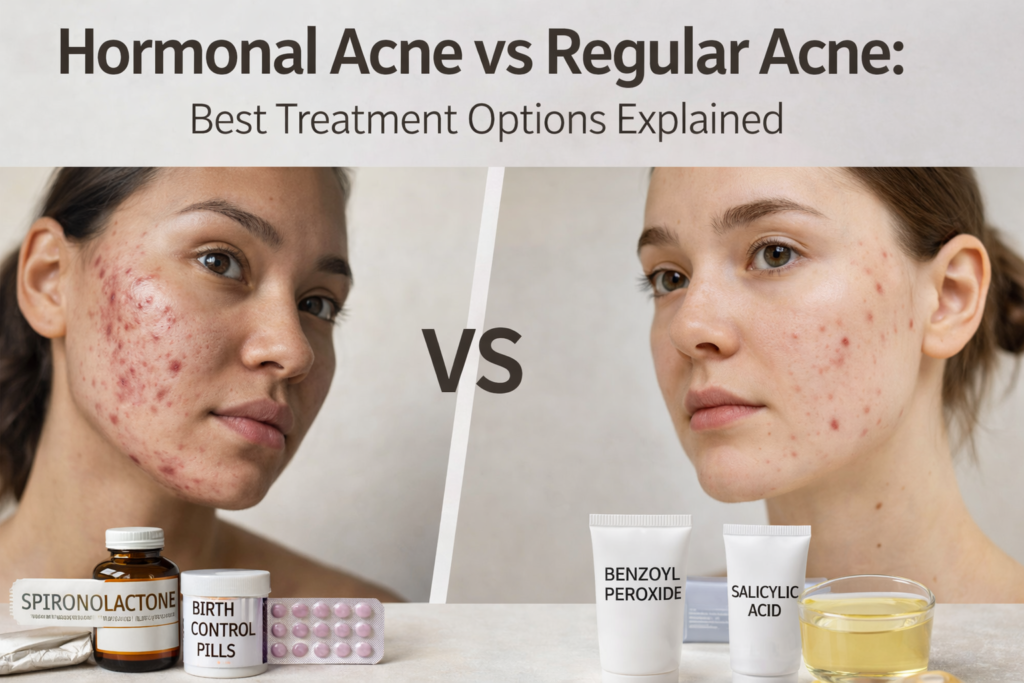
Hormonal Acne vs Regular Acne: Side-by-Side Comparison
| Feature | Regular Acne | Hormonal Acne |
| Primary Cause | Bacteria, clogged pores | Hormone fluctuations |
| Typical Location | T-zone (forehead, nose) | U-zone (jawline, chin) |
| Type of Breakout | Blackheads, whiteheads, pustules | Deep cysts, nodules |
| Timing | No predictable pattern | Cyclic (around periods, stress) |
| Pain Level | Mild to moderate | Often severe and tender |
| Response to OTC Products | Usually responds well | Often resistant |
| Common Age Group | Teenagers, young adults | Adult women (20s–40s) |
| Duration of Breakouts | Days | Weeks to months |
How to Tell Which Type of Acne You Have
Ask yourself these four questions:
1. Where are your breakouts? Jawline and chin = likely hormonal. Forehead and nose = likely regular acne.
2. Do breakouts follow a pattern? If they flare up around your period, during stress, or after hormonal changes — it’s almost certainly hormonal acne.
3. How deep are they? Surface-level pimples you can pop? Regular acne. Deep, painful lumps that never come to a head? Hormonal.
4. Have OTC products helped? If benzoyl peroxide and salicylic acid have done nothing for your skin after weeks of consistent use — your acne likely has a hormonal root cause.
Best Treatment Options for Regular Acne
The good news: regular acne often responds very well to consistent, targeted skincare.
Topical Treatments (Over-the-Counter)
- Benzoyl Peroxide — kills acne-causing bacteria
- Salicylic Acid — unclogs pores, reduces inflammation
- Niacinamide — controls oil, soothes redness
- Adapalene (Differin) — retinoid that speeds cell turnover
Prescription Topicals
- Tretinoin — stronger retinoid for persistent acne
- Clindamycin gel — topical antibiotic
Lifestyle Adjustments
- Cleanse twice daily with a gentle, non-comedogenic face wash
- Always remove makeup before bed
- Change pillowcases at least twice a week
- Avoid touching your face throughout the day
- Stay hydrated and reduce high-glycemic foods
Best Treatment Options for Hormonal Acne
Hormonal acne needs a different strategy — one that targets the root hormonal cause, not just the surface symptom.
Prescription Oral Medications
- Spironolactone — blocks androgen receptors, reduces oil production. Highly effective for women with hormonal acne
- Oral Contraceptives (Birth Control Pills) — regulates estrogen and progesterone levels; specific formulations are approved for acne
- Isotretinoin (Accutane) — reserved for severe, stubborn cases; addresses all known acne-causing factors simultaneously
Topical Treatments That Still Help
Even for hormonal acne, topicals can provide meaningful support:
- Retinoids (Tretinoin/Adapalene) — reduce clogged pores and inflammation
- Azelaic Acid — calms inflammation and fades post-acne marks
- Clindamycin — reduces bacterial contribution
In-Clinic Procedures
- Chemical Peels — exfoliate deeply, reduce oil, fade pigmentation
- LED Light Therapy — blue light kills bacteria; red light reduces inflammation
- Cortisone Injections — rapid reduction of painful cystic breakouts
- Laser Treatments — target oil glands, reduce scarring
Hormonal & Lifestyle Support
- Prioritize 7–9 hours of sleep (poor sleep spikes cortisol)
- Practice stress management — yoga, meditation, regular exercise
- Consider reducing dairy and high-sugar foods, which can elevate insulin and androgen levels
- Try spearmint tea — some studies suggest it can lower androgen levels naturally
The Role of Diet in Acne
Both types of acne can be influenced by what you eat. Here’s a quick guide:
| Food Category | Effect on Acne |
| High-Glycemic Foods (white bread, sugar) | Increases insulin → raises androgen → more oil |
| Dairy Products | May increase androgen levels in some people |
| Omega-3 Rich Foods (fish, flaxseed) | Anti-inflammatory; may reduce breakouts |
| Green Vegetables, Antioxidants | Support overall skin health |
| Spearmint Tea | May reduce androgens |
| Processed, Fried Foods | Promotes inflammation |
A diet overhaul alone won’t cure acne — but combined with the right medical treatment, it makes a real difference.
When to See a Dermatologist
Don’t wait until your acne is severe to seek professional help. See a dermatologist when:
- Breakouts are deep, painful, and cystic
- Acne is leaving dark marks or scars
- OTC products haven’t helped after 8–12 weeks
- Acne is affecting your confidence or mental health
- You suspect a hormonal condition like PCOS
At Alpha Skin Clinic, Indore, Dr. Jaismeen Kaur Arora offers personalized, evidence-based acne treatment plans — whether you’re dealing with stubborn hormonal cysts or persistent teenage breakouts. As a skilled dermatologist in Indore, Dr. Arora conducts thorough skin evaluations and may recommend blood tests, hormone panels, or skin analysis to get to the actual root of your breakouts.
You don’t have to keep guessing. The right diagnosis changes everything.
Building a Skincare Routine for Acne-Prone Skin
Whether hormonal or regular, a consistent routine is non-negotiable.
Morning Routine:
- Gentle, non-comedogenic cleanser
- Niacinamide or azelaic acid serum
- Oil-free, non-comedogenic moisturizer
- SPF 30+ sunscreen (non-negotiable — sun exposure worsens acne marks)
Evening Routine:
- Double cleanse if wearing sunscreen or makeup
- Prescribed topical (retinoid or treatment gel)
- Light, hydrating moisturizer
Weekly Add-Ons:
- Gentle exfoliation (2x per week max)
- Clay mask for oily/congested skin
Final Thoughts: The Right Diagnosis Is Half the Battle
Here’s the bottom line: treating acne without knowing its type is a shot in the dark.
Hormonal acne and regular acne may look similar on the surface, but they have different root causes, appear in different places, and require completely different treatment approaches. Using the wrong products not only wastes time and money — it can actually make things worse.
If you’ve been fighting breakouts for months (or years) without real results, it’s time to stop guessing and start treating the actual problem.
Dr. Jaismeen Kaur Arora and the team at Alpha Skin Clinic, Indore are here to help you do exactly that — with a personalized, medically sound approach to clearer, healthier skin.
📍 Visit Alpha Skin Clinic, Indore 📞 Book your consultation today and finally understand what your skin is trying to tell you.
FAQs
Q1. Can men get hormonal acne too?
Yes, absolutely. While hormonal acne is more common in women, men can also experience it — especially during puberty or periods of chronic stress, when cortisol and testosterone levels fluctuate significantly.
Q2. Will hormonal acne go away on its own?
It might improve after major hormonal shifts (like post-pregnancy), but for most adults, hormonal acne is a recurring condition that benefits greatly from medical treatment. Waiting it out can lead to scarring.
Q3. Is it safe to pop hormonal acne cysts at home?
No — and this is important. Hormonal cysts sit deep beneath the skin. Attempting to pop them can push bacteria deeper, worsen inflammation, and significantly increase your risk of permanent scarring. Leave them alone or visit a clinic for a safe cortisone injection.
Q4. How long does it take to see results from hormonal acne treatment?
Oral medications like spironolactone typically take 2–3 months to show visible improvement. Topical treatments may take 6–12 weeks. Consistency is key — and working with a dermatologist ensures you’re on the right track.
Q5. Can stress alone cause acne breakouts?
Yes. Chronic stress elevates cortisol, which in turn triggers androgen production — leading directly to increased oil production and breakouts. This is why stress management is a genuine part of any acne treatment plan, not just an optional add-on.