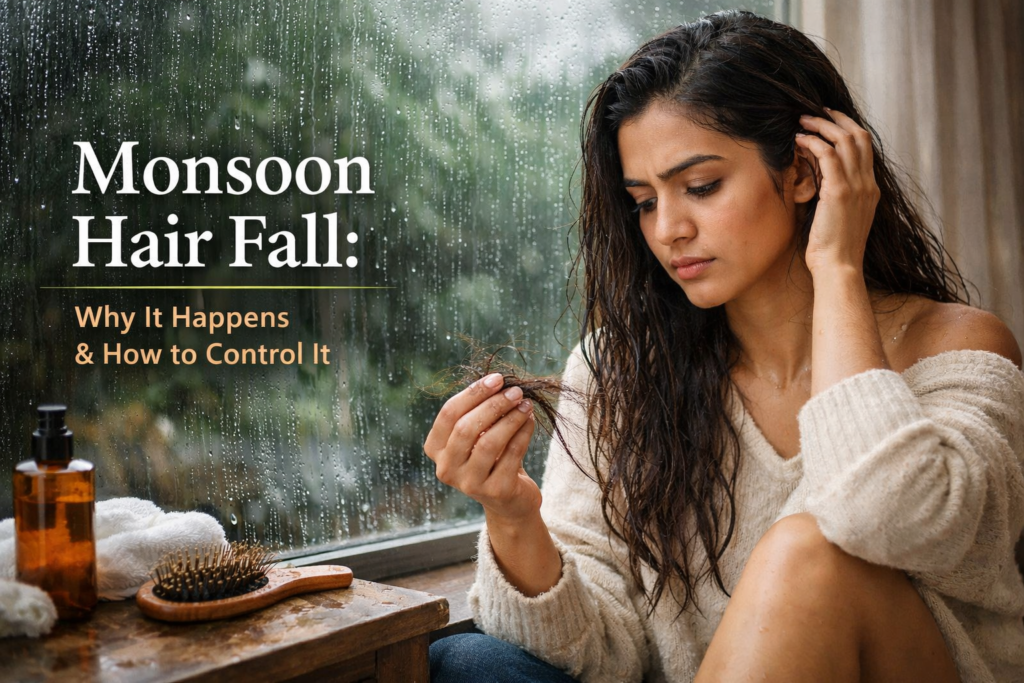
You’re Not Imagining It — Monsoon Really Does Make Your Hair Fall More
You shampoo your hair and the drain clogs. You run a comb through and it comes out with a small bundle. You glance at your pillow and feel your heart sink a little.
Every monsoon, millions of people in India experience a sudden, alarming surge in hair fall. And the worst part? Most of them blame the wrong things — switching shampoos, oiling more, panicking — without understanding why it actually happens.
If you’ve been searching for effective Hair Fall Treatment in Indore or simply want to understand why the rainy season is so brutal on your hair, you’re in the right place. This blog breaks down the real science, the practical fixes, and the signs that tell you it’s time to see a professional.
Why Does Hair Fall Spike During Monsoon?
Before jumping to solutions, you need to understand the root causes. Monsoon hair fall is not one single problem — it’s a combination of environmental, biological, and lifestyle triggers all happening at once.
1. Sky-High Humidity Weakens Your Hair Shaft
During monsoon, humidity levels in cities like Indore can shoot up to 80–95%. Hair absorbs moisture from the air, causing the hair shaft to swell. This swelling weakens the outer cuticle layer, making strands brittle, porous, and extremely prone to breakage.
Hair that’s already chemically treated, heat-styled, or nutritionally stressed becomes even more vulnerable.
2. Rainwater Is Not Clean — It’s Acidic
Rainwater collects pollutants, dust, sulphur dioxide, and nitrogen oxides as it falls through the atmosphere. By the time it touches your scalp, it’s mildly acidic and loaded with contaminants.
This disrupts your scalp’s natural pH balance (which should be mildly acidic at ~4.5–5.5), weakening the follicles and causing increased shedding.
3. Excess Sebum Clogs Hair Follicles
Humid weather triggers your scalp’s sebaceous glands to produce more oil (sebum) as a natural defense mechanism. While some sebum is essential, excess oil mixes with sweat, dead skin cells, and pollution — clogging follicles and choking hair roots.
Clogged follicles = weakened hair roots = more hair fall.
4. Scalp Fungal Infections Thrive in the Wet Season
Warmth + moisture = a paradise for fungi and bacteria.
Monsoon dramatically increases the risk of scalp conditions like:
- Dandruff (Seborrheic Dermatitis) — flaky, itchy scalp that inflames hair follicles
- Tinea Capitis (Scalp Ringworm) — fungal infection causing patchy hair loss
- Folliculitis — bacterial infection of hair follicles
These infections weaken the root from within, causing hair to shed prematurely.
5. Telogen Effluvium — The Seasonal Reset
There’s a well-documented biological phenomenon called Telogen Effluvium — a condition where a large number of hair follicles simultaneously shift from the growth phase (anagen) into the resting/shedding phase (telogen).
Research suggests that humans naturally shed more hair in late summer and early autumn — which directly overlaps with India’s monsoon season. This “seasonal reset” can cause hair loss to increase by up to 30% above normal for a period of 6–8 weeks.
The good news: it’s temporary. The bad news: if other triggers are layered on top, it can become chronic.
6. Nutritional Deficiencies Worsen with Dietary Changes
Many people unconsciously change their diet in monsoon — eating less fresh produce, more fried or processed snacks, and drinking less water. This can quietly drop your levels of:
- Iron — essential for oxygen delivery to follicles
- Biotin (Vitamin B7) — supports keratin structure
- Zinc — regulates the hair growth cycle
- Vitamin D — linked directly to hair follicle cycling
Even a mild deficiency in any of these can tip a vulnerable follicle over the edge.
How Much Hair Fall Is “Normal” in Monsoon?
| Hair Fall Per Day | What It Means |
| 50–100 strands | Normal — part of the natural growth cycle |
| 100–200 strands | Elevated — monitor closely; review diet and scalp health |
| 200–250+ strands | Concerning — likely seasonal + environmental triggers combined |
| Visible thinning or bald patches | Seek professional evaluation immediately |
10 Proven Ways to Control Monsoon Hair Fall
1. Wash Your Hair More Frequently (But Gently)
Yes, you read that right. During monsoon, washing 3–4 times a week (instead of the usual 1–2) helps remove sweat, sebum, and pollutant buildup before they clog follicles.
Use a mild, sulphate-free, pH-balanced shampoo. Harsh shampoos strip essential oils and aggravate the situation.
2. Dry Your Hair Completely Before Tying It
Wet hair tied in a bun or braid for hours is one of the biggest monsoon hair mistakes. Trapped moisture in the scalp creates the perfect breeding ground for fungal growth.
Always dry your hair completely — ideally with a microfiber towel and natural air drying. Minimize heat tool use since wet + heat causes breakage.
3. Apply Anti-Fungal or Medicated Shampoo If Needed
If you notice persistent dandruff, itching, or flaking, switch to a ketoconazole or zinc pyrithione-based shampoo (use twice a week as directed). These are clinically proven to treat fungal scalp conditions that worsen in monsoon.
Always check with a doctor before using medicated shampoos long-term.
4. Oil Your Scalp — But Do It Right
Oiling is beneficial, but timing matters. Oil 1–2 hours before washing, not overnight during monsoon. Leaving oil on a humid scalp overnight can attract more fungal activity.
Best monsoon-friendly oils:
- Coconut oil — antifungal, deeply nourishing
- Neem oil — antibacterial, treats scalp infections
- Castor oil — stimulates follicle blood circulation
- Tea tree-blended oils — antifungal, great for oily scalps
5. Cover Your Hair When Stepping Out in the Rain
Invest in a good scarf, umbrella, or waterproof hat. Avoiding direct rainwater contact prevents acidic rain from sitting on your scalp. If you do get wet, rinse your hair with clean water as soon as possible and condition well.
6. Eat for Hair Health
Your hair is made of protein (keratin), so what you eat directly impacts what grows — and what falls.
Monsoon hair-strengthening foods:
- Eggs, lentils, chickpeas — protein + biotin
- Spinach, methi (fenugreek) — iron + folate
- Almonds, walnuts — vitamin E + omega-3 fatty acids
- Pumpkin seeds, sunflower seeds — zinc
- Amla (Indian gooseberry) — Vitamin C + antioxidants
Stay hydrated. Hair follicles are 95% protein and water — dehydration makes strands fragile.
7. Detangle Gently — Always on Dry Hair
Monsoon hair is fragile. Never brush wet hair. Use a wide-tooth comb starting from the ends and working upward. Avoid tight hairstyles that pull on roots.
8. Scalp Massage with Intention
A 5-minute scalp massage 3 times a week improves blood circulation to follicles, distributes natural oils, and reduces stress — one of the key triggers of Telogen Effluvium.
Use fingertips, not nails. You can massage with or without oil.
9. Manage Stress Actively
Stress is a well-proven trigger of Telogen Effluvium. Monsoon season, with its change in routine, reduced sunlight, and mood shifts, can quietly raise cortisol levels.
Incorporate daily walks, yoga, breathing exercises, or even 10 minutes of journaling to keep cortisol in check.
10. Check Your Vitamin D Levels
Indore sees significantly reduced direct sunlight during monsoon. Since Vitamin D is crucial to the hair growth cycle and mostly synthesized through sun exposure, many people become Vitamin D-deficient by the end of the season.
A simple blood test can confirm your levels. If low, supplementation under medical guidance can make a significant difference.
When Home Remedies Are Not Enough
Not all monsoon hair fall is temporary or manageable with lifestyle changes alone.
You should consult a professional if:
- Hair fall has continued for more than 8–10 weeks
- You notice thinning at the crown, temples, or a receding hairline
- There are bald patches appearing on the scalp
- Your scalp is persistently itchy, inflamed, or scaly
- Hair fall is accompanied by fatigue, weight changes, or irregular periods (possible hormonal or thyroid issue)
This is where expert diagnosis matters. Dr. Jaismeen Kaur Arora at Alpha Skin Clinic specializes in diagnosing the exact cause of your hair fall — whether it’s seasonal, hormonal, nutritional, or follicle-related — and creates a personalized treatment plan to address it from the root.
Advanced clinical options available at Alpha Skin Clinic include:
- PRP Therapy (Platelet-Rich Plasma) — uses your own growth factors to reactivate hair follicles
- GFC Therapy (Growth Factor Concentrate) — a more concentrated, advanced evolution of PRP
- Mesotherapy — delivers vitamins and minerals directly into the scalp
- Medicated Scalp Treatments — for fungal infections, dandruff, and folliculitis
- Nutritional & Hormonal Assessment — to identify internal deficiencies driving the fall
Getting the right diagnosis from a qualified dermatologist in Indore is the fastest way to stop chasing the wrong solutions and start actually regrowing your hair.
Monsoon Hair Care: Quick-Reference Dos and Don’ts
| ✅ DO | ❌ DON’T |
| Wash hair 3–4x/week with gentle shampoo | Leave hair tied while wet |
| Dry hair completely before styling | Apply oil overnight on humid scalp |
| Use wide-tooth comb on dry hair | Brush wet hair aggressively |
| Cover hair when stepping in rain | Ignore persistent dandruff or itching |
| Eat protein and iron-rich foods | Switch shampoos randomly without reason |
| Get Vitamin D and iron levels tested | Delay consulting a doctor if fall persists |
| Massage scalp 3x/week | Use tight hairstyles daily |
FAQs
Q1. Is hair fall in monsoon permanent?
No, for most people, monsoon hair fall is temporary — triggered by Telogen Effluvium, increased humidity, and scalp changes. It typically normalizes within 6–10 weeks after the season ends. However, if the hair fall is accompanied by visible thinning or bald patches, or continues beyond 2–3 months, it may indicate a deeper issue that requires professional evaluation.
Q2. Why is my hair falling out more than usual even though I’m oiling and shampooing regularly?
Oiling and shampooing address only surface-level hygiene. Monsoon hair fall is often driven by internal causes like nutritional deficiencies (iron, zinc, Vitamin D, biotin), hormonal shifts, or scalp infections — none of which can be fixed by topical care alone. A blood test and scalp examination by a specialist gives a far more accurate picture.
Q3. Can hard water or rainwater cause long-term damage to my hair?
Yes, both can contribute. Rainwater is acidic and pollution-laden, disrupting scalp pH. Hard water (common in Indore) contains high calcium and magnesium deposits that coat the hair shaft, making it dry and brittle over time. Using a chelating or clarifying shampoo once a week helps remove mineral buildup. A water softener attachment for your shower is also a worthwhile investment.
Q4. How soon can I expect results from clinical hair fall treatments like PRP?
Most patients begin noticing reduced hair fall within 4–6 weeks of starting PRP or GFC therapy. Visible improvement in hair density and thickness is typically seen after 3–6 sessions, which are usually spaced 4 weeks apart. Results vary based on the underlying cause, age, and consistency of treatment and follow-up care.
Q5. Is it safe to color or chemically treat hair during monsoon?
It’s strongly advisable to avoid chemical treatments — coloring, perming, relaxing — during the monsoon season. Hair is at its most porous and fragile state due to humidity, making it far more susceptible to damage from chemicals. If you must color, wait until after the monsoon ends and condition your hair intensively beforehand.
Final Thoughts: Don’t Wait for It to Get Worse
Monsoon hair fall is real, common, and — in most cases — very controllable. But “common” doesn’t mean you have to live with it without understanding it.
Start with the basics: a gentle hair care routine, the right nutrition, scalp hygiene, and stress management. These alone can make a visible difference within 3–4 weeks.
And if the hair fall continues, thins your crown, or feels out of control — don’t wait. Early treatment saves follicles. Delayed treatment makes the process harder and longer.
Book a consultation with Dr. Jaismeen Kaur Arora at Alpha Skin Clinic for a thorough scalp diagnosis and a treatment plan built specifically for your hair, your scalp, and your season.
Because healthy hair doesn’t come from luck — it comes from the right care, at the right time.
Alpha Skin Clinic | Dr. Jaismeen Kaur Arora | Indore Specializing in Advanced Dermatology, Hair Restoration & Skin Care